



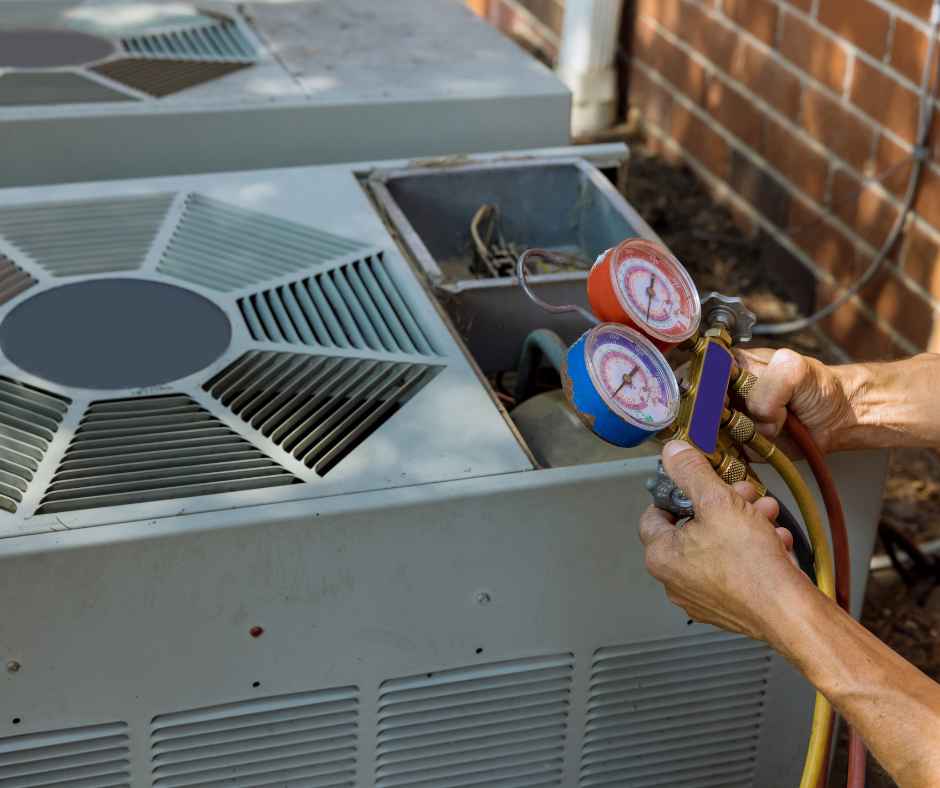
When either a furnace or air conditioner reaches the end of its service life, homeowners often wonder whether they should replace only the failed unit or upgrade the entire heating and cooling system at once.
Replacing both systems may improve compatibility, efficiency, comfort, and long-term reliability. However, it is not automatically the right choice for every Chicagoland home. The age and condition of the remaining equipment, the way the components work together, and your future plans should all affect the decision.
In this guide, we will explain when replacing your furnace and air conditioner together makes sense, when replacing only one unit may be reasonable, and what to evaluate before you approve the installation.
How Do the Furnace and Air Conditioner Work Together?
A central furnace and air conditioner may look like separate systems, but they share several important components.
A typical split HVAC system includes:
- An outdoor air-conditioning unit
- An indoor evaporator coil
- A furnace
- A furnace blower
- Ductwork
- A thermostat and system controls
- Condensate drainage
- Electrical connections
During the summer, the furnace blower moves air across the evaporator coil and through the ducts. During the winter, the same blower distributes heated air from the furnace.
Because the components operate together, installing a new air conditioner next to an older furnace can affect airflow, efficiency, humidity control, and reliability.
When Does Replacing Both Systems Make Sense?
Replacing the furnace and AC together may be worth considering when:
- The systems are close in age
- Both have needed frequent repairs
- The remaining unit is near the end of its expected service life
- The existing components are not compatible with new equipment
- You want higher-efficiency or variable-speed operation
- The furnace blower cannot support the new AC
- You want to avoid another major installation soon
- Both systems have comfort or performance problems
Completing one full-system replacement may also reduce repeated labor and disruption. The contractor can remove the old equipment, modify the shared connections, install the controls, and commission the entire system during one project.
How Old Are the Existing Systems?
Age alone does not determine whether equipment should be replaced, but it is an important factor.
Suppose the air conditioner has failed and the furnace is only a few years old, has a good maintenance history, and is fully compatible with the proposed AC. Replacing only the air conditioner may be a practical decision.
If the furnace is much older, has an aging blower motor, or has needed repeated repairs, keeping it may only delay another major expense.
Ask the contractor to evaluate:
- Installation dates
- Maintenance history
- Previous repairs
- Current efficiency
- Blower performance
- Heat exchanger condition
- Electrical and control components
- Expected parts availability
The goal is to avoid replacing reliable equipment unnecessarily while also avoiding a new system paired with a component that may soon fail.
What if Only One Unit Has Failed?
You do not always need to replace both systems when one stops working.
Replacing only the failed unit may make sense when the other system is:
- Relatively new
- In good mechanical condition
- Properly sized
- Compatible with the new equipment
- Still covered by a useful warranty
- Performing efficiently
- Free from recurring repair issues
The entire system should still be inspected before making that decision.
For example, a new outdoor AC cannot deliver its expected performance if the existing furnace blower does not move enough air. Likewise, a new furnace installation should account for the condition and future replacement needs of the evaporator coil sitting above it.
Why Equipment Compatibility Matters
New HVAC equipment should not be selected independently from the components that remain.
Compatibility may involve:
- Evaporator coil size
- Refrigerant type
- Blower capacity
- Airflow settings
- Electrical requirements
- Thermostat controls
- Variable-speed communication
- Manufacturer-approved combinations
A mismatched system may still operate, but it may not achieve its rated efficiency or provide the expected comfort.
Poor matching can contribute to:
- Weak cooling
- Excessive humidity
- Short cycling
- Uneven temperatures
- Higher energy use
- Premature component wear
- Warranty concerns
Before replacing only one component, ask the contractor to confirm that the new and existing equipment are designed to work together.
Can an Older Furnace Limit a New Air Conditioner?
Yes. The furnace blower is responsible for moving cooled air through the home.
An older furnace may have:
- A worn blower motor
- Limited speed settings
- Insufficient airflow
- Dirty internal components
- Outdated controls
- A cabinet that does not fit the new coil properly
A high-efficiency or variable-speed AC may not provide its full comfort benefits when paired with a blower that cannot support the required airflow and control strategy.
The system might still cool, but homeowners could experience longer cycles, uneven temperatures, poor humidity management, or higher operating costs.
How Efficiency Affects the Decision
Modern furnaces and air conditioners may offer higher efficiency than older equipment, but efficiency ratings depend on more than the outdoor unit.
Air conditioner efficiency may be influenced by:
- The indoor coil
- Blower motor
- Airflow settings
- Duct condition
- Equipment matching
- Installation quality
Furnace efficiency is commonly expressed through its AFUE rating, while air conditioner efficiency is measured using SEER2.
Replacing both systems may make it easier to select a matched combination designed to deliver the intended performance. However, a higher efficiency rating does not guarantee lower costs in every home.
Actual performance also depends on:
- Proper equipment sizing
- Thermostat settings
- Insulation
- Air leakage
- Duct losses
- Household habits
- Seasonal weather
Could Replacing Both Improve Comfort?
A complete HVAC replacement may improve more than heating and cooling capacity.
Depending on the selected equipment, homeowners may benefit from:
- More consistent temperatures
- Quieter operation
- Better airflow
- Improved humidity control
- Longer, steadier cycles
- Better thermostat control
- More even comfort between rooms
Variable-speed and multi-stage equipment can adjust output instead of operating at full capacity during every cycle.
These features may be particularly valuable in Chicagoland, where homes must handle both summer humidity and extended winter heating demands.
The duct system must still be capable of supporting the equipment. New heating and cooling units cannot fully correct undersized returns, disconnected ducts, or major air leakage.
Why Chicagoland Weather Matters
Chicagoland homeowners depend heavily on both heating and cooling.
A furnace that seems adequate in spring may become unreliable during a winter cold period. An aging air conditioner may continue operating during mild weather but fail when summer temperatures and humidity rise.
Replacing both systems together may help homeowners avoid:
- A second emergency replacement
- Another period without heating or cooling
- Repeated installation disruptions
- New financing or project planning soon after the first replacement
- Modifying shared HVAC components twice
This does not mean every older system must be replaced immediately. It does mean seasonal reliability should be part of the decision.
Can Replacing Both Reduce Installation Costs?
Replacing the furnace and AC during one project may reduce some duplicated costs.
Shared work may include:
- Equipment removal
- Permit coordination
- Sheet-metal modifications
- Thermostat setup
- Electrical work
- Drain connections
- Evaporator coil installation
- System testing
- Cleanup and disposal
If the furnace is replaced now and the AC is replaced a year later, technicians may need to reopen or modify some of the same areas.
Actual savings vary by home and equipment. Ask for separate estimates showing the cost of replacing one system versus replacing both.
When Should I Replace Only One System?
Keeping one unit may be the better choice when:
- The furnace and AC have a significant age difference
- One system was recently replaced
- The remaining unit has a strong maintenance history
- Compatibility has been confirmed
- The equipment is still efficient and reliable
- Your budget does not support a complete replacement
- You expect to move before the second system likely needs replacement
The decision should be based on inspection findings, not pressure to replace working equipment.
A reliable, compatible furnace does not need to be removed simply because the AC failed. The same is true of a newer air conditioner when the furnace needs replacement.
Should I Repair the Older Unit Instead?
Repair may be reasonable when the problem is isolated, parts are available, and the rest of the system remains in good condition.
Replacement may become more attractive when:
- Repairs are becoming frequent
- The equipment has major component damage
- Parts are difficult to obtain
- Comfort has declined
- Energy use has increased
- The system has significant corrosion
- The repair will not address broader reliability concerns
Avoid relying on one universal repair-versus-replacement formula. The cost, condition, age, warranty, and likely remaining service life should all be considered.
Could a Heat Pump or Dual-Fuel System Be an Option?
A complete system replacement also creates an opportunity to consider a different heating and cooling configuration.
A heat pump can provide both heating and cooling. A dual-fuel system combines a heat pump with a gas furnace, allowing the controls to select the appropriate heat source based on conditions and system design.
These options may affect:
- Electrical demand
- Gas use
- Equipment cost
- Available rebates or incentives
- Comfort preferences
- Backup heating needs
The best choice depends on the home’s electrical system, ductwork, insulation, fuel availability, and heating load.
Why Proper Sizing Is Essential
Replacement equipment should not be selected solely by copying the capacity of the old furnace and AC.
The original system may have been oversized or undersized. The home may also have changed since it was installed.
A professional heating and cooling load calculation should consider:
- Home size and layout
- Insulation levels
- Window type and orientation
- Air leakage
- Ceiling height
- Number of occupants
- Additions or renovations
- Duct condition
- Local seasonal conditions
Oversized equipment may short-cycle, control humidity poorly, and create uneven temperatures. Undersized equipment may run continuously and fail to maintain comfort during extreme weather.
Make the Right Replacement Decision for Your Chicagoland Home
Replacing your furnace and air conditioner at the same time may make sense when both systems are aging, compatibility is a concern, or you want to avoid another major HVAC project in the near future.
Replacing only one unit may be reasonable when the other system is newer, reliable, properly sized, and compatible with the proposed equipment.
Paragon Heating, Cooling & Tankless can evaluate your entire system, explain your replacement options, and help you choose equipment that fits your Chicagoland home. If your furnace or air conditioner is nearing the end of its service life, contact us today to schedule a professional HVAC assessment.
